Author name: teammdg

Coastland logo in black and white
Firm News

DCCM acquires Coastland Civil Engineering

DCCM Acquires Coastland Civil Engineering Updated: May 11, 2022 Santa Rosa, California (December 3, 2021) – DCCM, a national provider of design, consulting, and program & construction management services based in Houston, Texas, is pleased to announce the acquisition of Coastland Civil Engineering (Coastland). Based in northern California, Coastland is known for providing civil engineering, construction management, and building department services to public agencies throughout the regions they serve. For 30 years, their projects have encompassed a wide variety of transportation, water, wastewater, drainage, financing assistance, and contract engineering for cities, counties, special districts, and other governmental agencies as well as for private clients and universities. In acquiring Coastland, DCCM is partnering with industry veteran John Wanger, PE, who will continue in his role as CEO of Coastland. “We’re thrilled to welcome Coastland into the DCCM family,” commented James F. (Jim) Thompson, PE, DBIA, CEO of DCCM. “With a shared vision of strategic growth, a commitment to developing and investing in staff, and an unrelenting focus on client service, this partnership provides both companies with a resilient and diversified platform, from which to navigate our ever-changing markets moving forward in our now expanded region serving the West Coast.” “With DCCM’s investment in our clients and our staff in the northern California region, this partnership is about growth and bringing new possibilities to our team and the clients we serve,” said John Wanger. “As DCCM’s foundation in the West, we will continue to be that local firm our clients value but now with a more diverse set of capabilities, national support, and increased resources.” About Coastland Civil Engineering Coastland provides civil engineering, construction management, and building and safety services to public agencies spanning northern California. Since opening its doors in 1991, Coastland’s projects have encompassed a wide variety of transportation, water, wastewater, drainage, flood control, and public facilities. For more information, please visit: www.coastlandcivil.com. About DCCM DCCM is a provider of design, consulting, and program & construction management professional services focusing on infrastructure marketplaces throughout the public and private sectors. Through a family of complementary brand companies, DCCM serves a variety of end markets while offering a national reach. DCCM is aggressively hiring key industry professionals in all disciplines and is actively seeking further acquisition opportunities throughout North America. For more information, please visit: www.dccm.com.

Articles

Understanding Compound Flooding Through Integrated Modeling

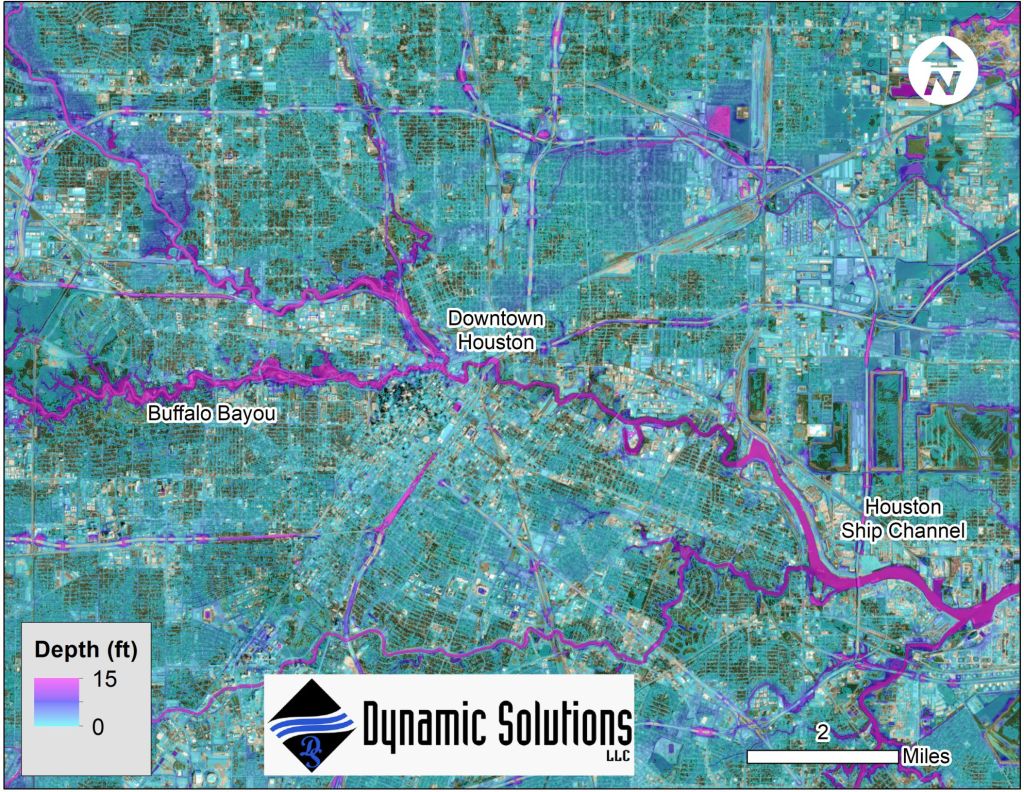
When a coastal storm makes landfall, which poses the greater flood risk: heavy rainfall or storm surge? The answer can be both. Coastal communities can experience multiple sources of flooding simultaneously. Storm surge pushes water inland while heavy rainfall generates runoff and increases riverine flows. Where these processes interact, the resulting compound flooding can create complex—and potentially devastating—conditions that cannot be fully understood by looking at each source independently. Accurately representing those interactions presents an important challenge for engineers and flood risk managers. The Challenge of Modeling Compound Flooding Historically, compound flooding has often been simulated by loosely coupling a hydrologic/hydraulic watershed model with a separate coastal storm surge model. Each model represents an important component of the overall event, but separating those processes can make it difficult to fully capture the nonlinear interactions among rainfall-runoff, riverine flows, and storm surge. The U.S. Army Engineer Research and Development Center (ERDC) developed an advanced version of the Adaptive Hydraulics Model (AdH) specifically to address this challenge. Unlike approaches that model individual flood sources separately, AdH can simulate rainfall-runoff, riverine flows, and storm surge together in a single, monolithic simulation. This allows the model to directly represent how multiple flood sources interact as conditions change throughout an event. Simulating Hurricane Harvey in Harris County DynamicSolutions | DCCM used the advanced version of AdH to perform a monolithic simulation of flooding in Harris County, Texas, during Hurricane Harvey. The analysis identified a 37-kilometer-long compound flooding transition zone within Buffalo Bayou where multiple flood sources interacted. Within a transition zone such as this, flooding cannot necessarily be attributed solely to rainfall, riverine flow, or coastal surge. Instead, water levels reflect the combined and nonlinear effects of multiple processes. A monolithic modeling approach allows these interactions to occur within the same simulation, providing a more complete representation of the resulting water levels and flood conditions. Looking Beyond Historical Events The value of compound flood modeling extends beyond recreating—or hindcasting—past storms. AdH can also be used to run stochastic coastal storm simulations to evaluate flood risk in coastal areas vulnerable to compound flooding. Rather than focusing solely on what occurred during a single historical event, these simulations can help evaluate potential flooding across a range of storm conditions. For communities where coastal surge, river systems, and rainfall-driven runoff converge, understanding these interactions can provide important information for flood risk assessment, infrastructure planning, and resilience efforts. As flood hazards become increasingly complex, the modeling tools used to understand them must be capable of representing that complexity. Integrated approaches such as AdH provide engineers and public agencies with a way to evaluate multiple flood mechanisms as the interconnected processes they are. DynamicSolutions | DCCM helps public agencies and project partners understand complex flood processes through advanced hydrodynamic modeling and water resources engineering. Explore DynamicSolutions | DCCM’s services or connect with our team to learn how our modeling expertise can support compound flood analysis, coastal and riverine flood risk assessment, and resilient infrastructure planning.

Rochester logo in color
Firm News

DCCM acquires Rochester & Associates

DCCM Acquires Rochester & Associates Updated: May 11, 2022 Gainesville, Georgia (August 31, 2021) – DCCM, a national provider of design, consulting, and program & construction management services based in Houston, Texas, is pleased to announce the acquisition of Rochester & Associates. Based in the greater Atlanta metro area, Rochester & Associates is known for providing private and public entities with civil engineering, land surveying, project management, and infrastructure services. The firm has long-standing relationships throughout the Southeast with state and local governments, real estate developers, state departments of transportation, and consulting engineering firms. In acquiring Rochester & Associates, DCCM is partnering with industry veteran Darrell Rochester, PE, who will continue in his role as CEO of Rochester & Associates, along with Brian Rochester, who will continue his role as Executive Vice President. “We’re delighted to welcome Rochester & Associates into the DCCM family,” commented James F. (Jim) Thompson, PE, DBIA, CEO of DCCM. “This is a tremendous step for DCCM in expanding our reach east, and we couldn’t have found a better partner to lead the way. As we’ve gotten to know the Rochester team, it’s clear there is tremendous alignment in the way we operate, serve clients, and care for our people, and we can’t wait to combine our efforts and build towards our shared vision together.” “We are extremely happy to join the DCCM family of companies as the next step of our company’s evolution and growth,” said Darrell Rochester. “Bringing excellent products and services to this market is a major cornerstone of our family business, and our clients will continue to enjoy the responsive, trusted service they’ve come to expect, along with access to DCCM’s national presence and resources.” “After 55 years of success, Rochester & Associates is looking forward to the opportunity of benefiting from DCCM’s resources and scale,” said Brian Rochester. “DCCM’s capabilities will also undoubtedly strengthen Rochester & Associates’ holistic approach to business. There’s a real synergy between the two companies and the complimentary services we provide.” **** About Rochester & Associates Rochester & Associates is a multifaceted provider of civil engineering, land surveying, project management, and infrastructure services. The company was established in 1966 by B. Keith Rochester, RLS, as a surveying firm serving the southeastern United States. Since that time, the firm has grown in size, number of offices, and scope of services to become a multidisciplinary civil engineering consulting firm. For more information, please visit: www.rochester-assoc.com. About DCCM DCCM is a provider of design, consulting, and program & construction management professional services focusing on infrastructure marketplaces throughout the public and private sectors. Through a family of complementary brand companies, DCCM serves a variety of end markets while offering a national reach. DCCM is aggressively hiring key industry professionals in all disciplines and is actively seeking further acquisition opportunities throughout North America. For more information, please visit: www.dccm.com.

Binkley & Barfield logo in color
Firm News

DCCM acquires Binkley & Barfield, Inc.

DCCM Acquires Binkley & Barfield, Inc. Updated: May 11, 2022 Houston, Texas (August 6, 2021) – DCCM, a national provider of design, consulting, and program & construction management services, is pleased to announce the acquisition of Binkley & Barfield. Based in Houston, Texas, Binkley & Barfield is known for its portfolio of projects requiring complex consulting services for county and municipal clients, regional and state surface transportation, public infrastructure, as well as gas pipeline, telecommunications, and electrical distribution projects. In acquiring Binkley & Barfield, DCCM is partnering with industry veteran Harold (JR) Reddish, PE, FNSPE, FSAME, who will continue in his role as President of Binkley & Barfield, along with Brett Binkley and Larry Barfield, PE, FNSPE, FTEF, who will continue their roles as CEO and Chairman Emeritus, respectively. James F. (Jim) Thompson, PE, DBIA, CEO of DCCM, noted, “Binkley & Barfield offers a unique team that brings the enthusiasm and energy to a seasoned firm, tempered by the high level of skill and professional relationships that can only be built through long-term experience. Through our combined businesses, we are unparalleled in markets we cover, with purpose-built and results-driven solutions that are customized for each client we work with.” “We have a proud history of driving the industry forward,” said JR Reddish, PE, FNSPE, FSAME, President of Binkley & Barfield. “As we work to achieve our corporate vision of creating a better future for our clients and our communities, we’re eager to take the next step to transform ourselves into an even more innovative, diverse, sustainable, customer-focused company for the future. Partnering with DCCM will showcase us as having a local presence with a national reach. This strategic business move will increase our depth of service, resources, and talent.” When asked about the reasons behind the partnership, Brett Binkley, CEO of Binkley & Barfield, responded, “It’s a great match—our cultures are both highly focused on providing our clients with an exceptional service experience, and the combination of our resources will give the clients of both firms even greater service as well as an additional depth of resources. I am confident that as our clients learn more about DCCM, the same conclusion will be reached—that this is a natural fit.” “Our loyal customer base, appetite to expand our services within our own footprint, and ability to find new strategic growth areas outside of what we’ve traditionally done has fueled our growth from day one,” said Larry Barfield, PE, FNSPE, FTEF, Binkley & Barfield’s Chairman Emeritus. “Without question, our new partnership with DCCM strengthens our capabilities and provides us with specialized market knowledge and deep client relationships that will accelerate our growth in the future. Our entire team could not be more pleased by this partnership.” About Binkley & Barfield Binkley & Barfield is a multidisciplinary engineering consulting firm with headquarters in Houston and fully staffed regional offices in College Station, Corpus Christi, Richardson, Round Rock, and San Antonio. Incorporated in 1971, the firm has served their clientele for over 50 years. Binkley & Barfield provides a comprehensive range of engineering services, including utility engineering and coordination, subsurface utility engineering (SUE), power, telecommunications, pipeline, construction management, transportation, structural, traffic, infrastructure (including roadway, drainage, water, and wastewater), land development, and GIS. For more information, please visit: www.binkleybarfield.com. About DCCM DCCM is a provider of design, consulting, and program & construction management professional services focusing on infrastructure marketplaces throughout the public and private sectors. Through a family of complementary brand companies, DCCM serves a variety of end markets while offering a national reach. DCCM is aggressively hiring key industry professionals in all disciplines and is actively seeking further acquisition opportunities throughout North America. For more information, please visit: www.dccm.com.

Articles

Advancing Compound Flood Modeling with an Integrated Approach

Flooding rarely occurs from a single source. During major storm events, heavy rainfall, riverine flooding, and coastal storm surge can occur simultaneously, creating compound flooding conditions that are more complex—and potentially more damaging—than any individual flood process. Understanding how these processes interact is critical to accurately estimating flood hazards and supporting resilient infrastructure planning. Yet, traditional modeling approaches often evaluate individual flood sources separately and then combine the results. While useful for certain applications, this approach may not fully represent the interactions occurring between rainfall, rivers, and coastal systems during an extreme event. DynamicSolutions | DCCM recently collaborated with the U.S. Army Engineer Research and Development Center (ERDC) to advance a more integrated approach to compound flood modeling. Capturing Multiple Flood Processes in a Single Model The project involved implementing an advanced version of the Adaptive Hydraulics Model (AdH) capable of simulating the combined impacts of heavy rainfall, riverine flooding, and coastal storm surge within a single modeling framework. By representing these processes together, the model can account for interactions that may be missed when individual flood sources are modeled independently. This provides a more integrated representation of how water moves through interconnected coastal and riverine environments during major storm events. The approach is particularly valuable in areas where rainfall-driven runoff, river flows, and coastal water levels can influence one another and contribute collectively to flood conditions. Applying the Model to Hurricane Harvey To demonstrate the advanced modeling capabilities, DynamicSolutions | DCCM and ERDC applied the model to Hurricane Harvey in Galveston Bay and Harris County, Texas. Hurricane Harvey provided an opportunity to evaluate a complex event involving multiple sources of flooding across a large coastal and urban environment. Using the advanced version of AdH, the team simulated the combined influence of heavy rainfall, riverine flooding, and coastal storm surge within a single model. Rather than treating these mechanisms as isolated processes, the integrated approach allowed their interactions to be represented directly within the simulation. Improving Our Understanding of Compound Flood Risk As communities plan for extreme weather and changing flood risks, understanding compound flooding is increasingly important. Flood hazard assessments that better represent the interaction among multiple flood sources can provide engineers, planners, and public agencies with more complete information for evaluating vulnerabilities and planning infrastructure improvements. Integrated modeling approaches such as this can help advance the way complex flood events are analyzed—providing a more comprehensive picture of how rainfall, rivers, and coastal systems work together during extreme conditions. DynamicSolutions | DCCM brings specialized expertise in hydrodynamic modeling and water resources engineering to help public agencies and project partners better understand complex flood processes and evaluate infrastructure challenges. Explore DynamicSolutions | DCCM’s services or connect with our team to learn how our modeling and water resources expertise can support flood risk assessment, resilient infrastructure planning, and complex water resources projects.

Articles

A Practical Approach to Sediment Transport Modeling

Sediment transport modeling can be an important tool for understanding how waterways respond to changes in flow, channel geometry, and proposed improvements. However, comprehensive numerical sediment modeling can also require significant data collection, computational effort, and budget. For many projects, particularly during early planning and alternatives development, that level of analysis may not be necessary. A more targeted approach can provide valuable insight while allowing project teams to focus resources where they will have the greatest impact. Using Hydrodynamic Modeling to Inform Sediment Assessments DynamicSolutions | DCCM recently applied this approach for a U.S. Army Corps of Engineers (USACE) study on the Arkansas River. Rather than beginning with a comprehensive numerical sediment transport model, our team leveraged results from an existing two-dimensional (2D) hydrodynamic model to estimate sediment transport capacity through a problem reach. The hydrodynamic model provided information about hydraulic conditions within the reach that could be evaluated in the context of sediment movement. Using these results, our team developed estimates of sediment transport capacity and assessed how proposed changes could influence conditions within the study area. Supporting Efficient Alternatives Screening The analysis provided a practical way to screen alternative designs for navigation improvements without immediately undertaking a more extensive sediment modeling effort. This type of approach can be particularly useful during early project phases, when the primary objective is to understand relative differences among alternatives and identify concepts that warrant further investigation. By using available hydraulic information to evaluate sediment transport behavior, project teams can narrow the range of alternatives before investing in more detailed analyses. It also allows the level of modeling effort to better match the decisions being made. If an initial assessment identifies significant sediment-related concerns or uncertainties, more comprehensive sediment transport modeling can then be focused on the alternatives and locations where additional detail is most valuable. Matching the Analysis to the Project Sedimentation studies do not always require the most complex modeling approach from the outset. The appropriate methodology depends on the project objectives, available data, site conditions, and level of detail needed to support decision-making. For the Arkansas River study, leveraging 2D hydrodynamic model results provided an efficient means of estimating sediment transport capacity and screening navigation improvement alternatives. The result was a focused analysis that provided useful technical information while recognizing the data, schedule, and budget considerations associated with more comprehensive numerical sediment modeling. By selecting an analytical approach that matches the questions a project needs to answer, engineers can provide meaningful sedimentation insights while reserving more intensive modeling efforts for situations where they are truly warranted. DynamicSolutions | DCCM helps public agencies and project partners apply practical, data-driven approaches to complex water resources challenges—from hydrodynamic and sediment transport modeling to navigation, river engineering, and waterway improvements. Explore DynamicSolutions | DCCM’s services or connect with our team to learn how our water resources expertise can support your next project.

r.g. miller engineers logo in color
Firm News

DCCM acquires R. G. Miller Engineers, Inc.

DCCM Acquires R. G. Miller Engineers, Inc Updated: Feb 24, 2022 DCCM, a national provider of design, consulting, and program & construction management services, is pleased to announce the acquisition of R. G. Miller Engineers, Inc. (“RG Miller”). Based in Houston, TX, RG Miller is a growing provider of a wide range of infrastructure services to both public and private sector clients. In acquiring RG Miller, DCCM is partnering with industry veteran Jack Miller, who will continue in his role as President of RG Miller. James F. (Jim) Thompson, CEO of DCCM, noted, “I’ve known and worked with Jack in the civil engineering industry for over 30 years and am thrilled to have him as a business partner and a member of the DCCM team. Jack has built RG Miller into an incredible business, and we plan to only compound this success. We’re looking to build on this momentum and aggressively expand our growth throughout Texas and the entirety of North America.” Jack Miller, President of RG Miller, added, “We are looking forward to partnering with DCCM as we begin an exciting new chapter of our story. Having the opportunity to leverage our history and experiences with those of Jim’s within the Texas and U.S. marketplace will undoubtedly help accelerate our growth along with our breadth and depth of services.” About R. G. Miller Engineers, Inc. R. G. Miller Engineers, Inc. is a Houston-based civil engineering firm providing a wide range of infrastructure services to both public and private sector clients in Texas. RG Miller’s integrated team of professional engineers is skilled and experienced in all areas of site and land development, utility districts, public works, transportation, hydrology, and environmental engineering. The company’s engineers have planned and managed some of the largest projects in the multi-county area in and around the City of Houston, including retail and mixed-used developments, corporate campuses, multi-family housing complexes and county toll roads. R. G. Miller Engineers, Inc. is consistently ranked as one of the top 25 civil/structural engineering firms by the Houston Business Journal. For further information, please visit: www.rgmiller.com. About DCCM DCCM is a provider of design, consulting, and program & construction management professional services focusing on infrastructure marketplaces throughout the public and private sectors. Through a family of complementary brand companies, DCCM can serve a variety of end markets while offering a national reach. DCCM is aggressively hiring key industry professionals in all disciplines and is actively seeking further acquisition opportunities throughout North America. For further information, please visit: www.dccm.com.

Articles

Unnatural Wonder: Colorado River

This spring DynamicSolutions | DCCM’s own Steve Sanborn joined a Colorado River trip through the Grand Canyon. On the trip happened to be two journalists from The Arizona Republic working on a story about the effects of regulated flows on the Colorado River’s ecosystem. The reporters put together a great story and video, which uses footage and thoughts from Steve’s trip, about the challenges the river faces and efforts to revitalize the ecosystem. “A river once wild, muddy and warm now flows cold and clear, every drop measured out to supply cities and farms downstream. Water levels ebb and flow hourly, erasing the spring surges and summer droughts innate in desert rivers. Scientists manage nature’s cycles, adding what was lost, nursing what remains.” Read the Article

Scroll to Top